Making complex pricing
easier to manage.
A phased path from manual calculations and system handoffs toward a shared, configurable transport-pricing experience.

Pricing expertise was caught
in manual handoffs.
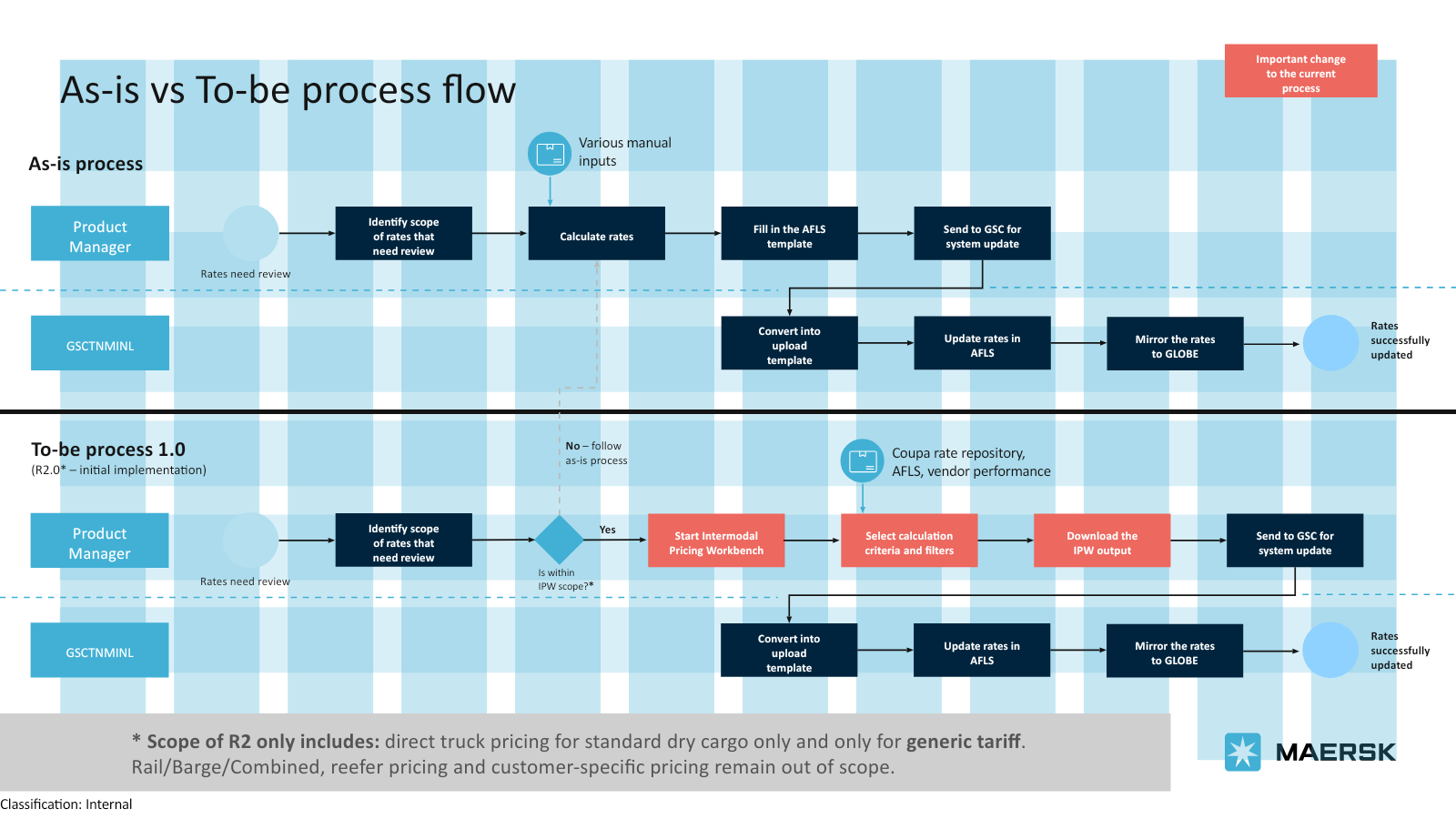
Product managers identified rates for review, calculated changes and filled an AFLS template. A shared-services team then updated the rates and mirrored them into GLOBE. The workflow crossed tools and teams before a rate became available.
Maersk’s programme ambition was to provide customers with timely, market-relevant inland transport rates while giving internal teams more time to develop products and customer solutions. Achieving that meant addressing both pricing logic and the operational journey around it.
A shared pricing capability
with room to grow.
The Intermodal Pricing Workbench combined cost inputs, market intelligence and configurable rules. Athena, Maersk’s digital pricing platform, would support product-specific pricing capabilities, allowing separate transport and service products to contribute to an aggregated price.
This introduced an important experience question: how could teams understand a suggested rate, adjust the relevant rules and confirm a change without navigating the complexity of every underlying system?
The leadership perspective is to connect that question to release scope and operating responsibilities. A coherent experience needs agreement on who sets the rules, who handles exceptions and how changes reach the systems that consume them.
Confidence depends on
seeing what shapes the price.
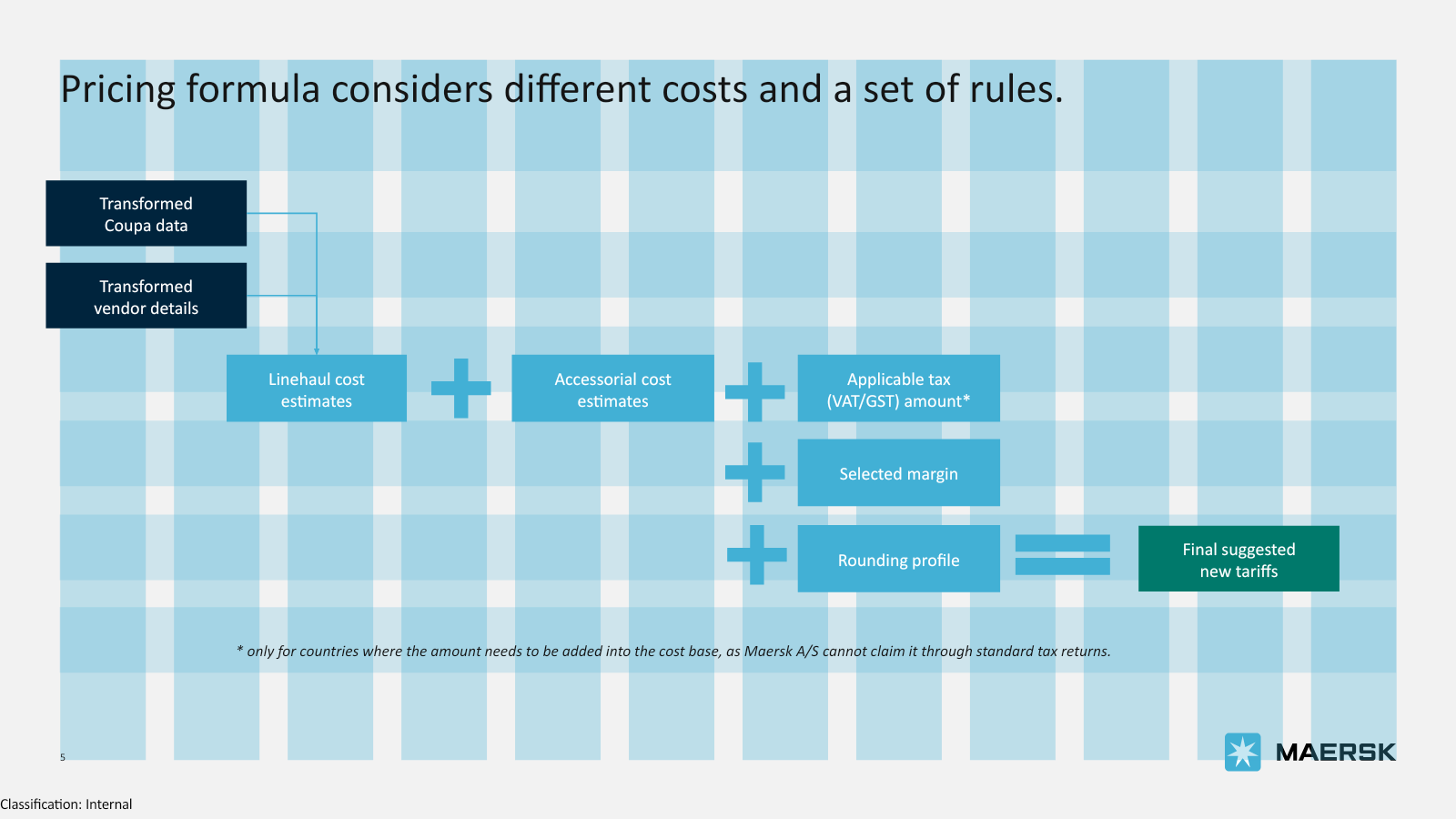
The pricing formula considered Coupa procurement data and vendor information, linehaul and accessorial costs, applicable tax, a selected margin and a rounding profile. These inputs informed suggested tariffs.
For experience design, this makes transparency essential. People need to distinguish source costs from configurable choices, understand which rules apply and recognise when an exception requires judgement. These are design implications of the documented formula, rather than claims about a tested interface.
Reduce the burden
without hiding the transition.
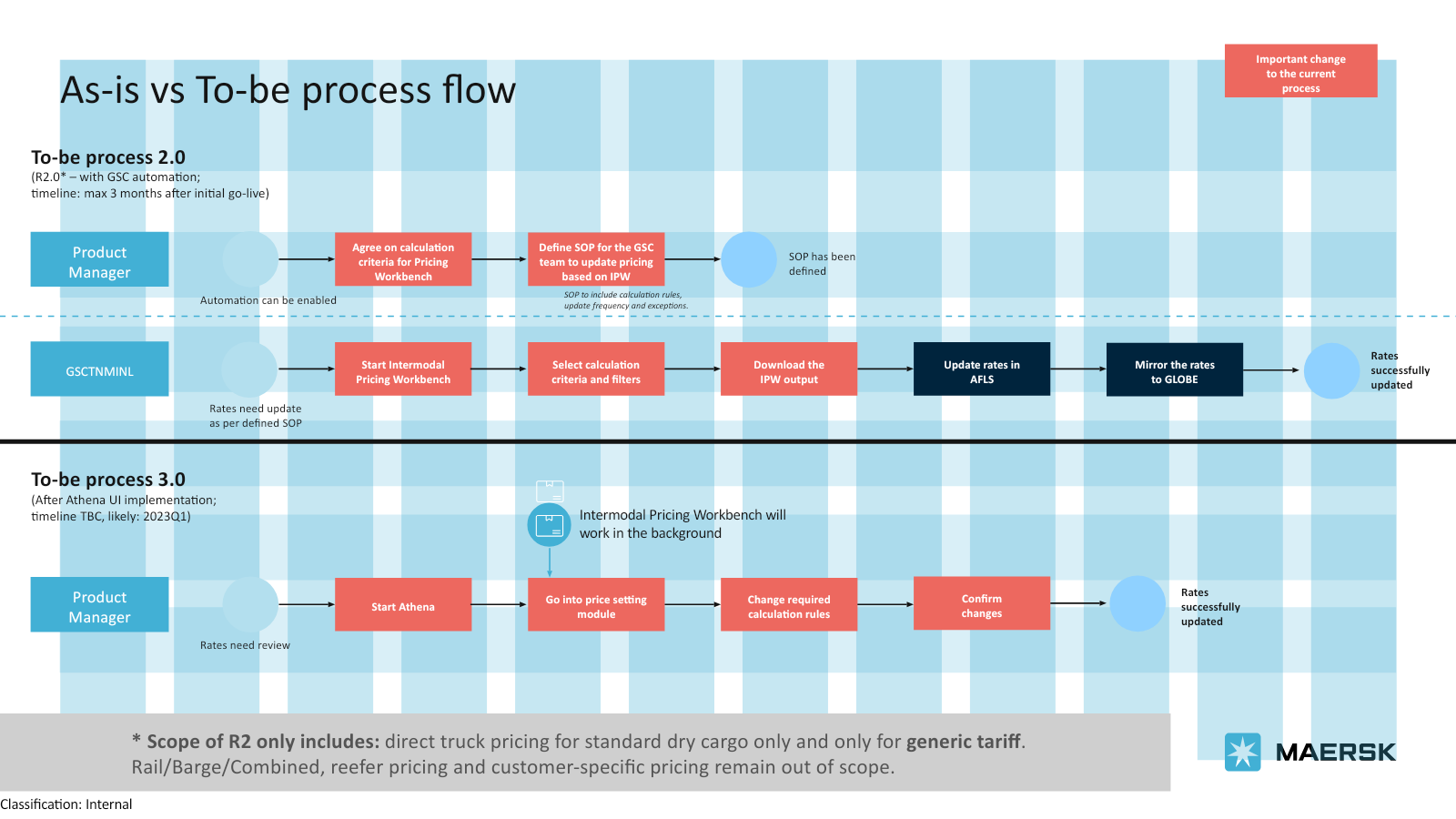
The roadmap described three stages. The initial release automated calculations while retaining a download and the existing system-update handoff. A later stage would let shared services operate against agreed calculation rules, update frequencies and exception procedures.
The longer-term experience would bring pricing rules into the Athena interface. Product managers would change the relevant calculation rules and confirm updates, while the workbench operated in the background.
The initial scope stayed deliberately narrow: direct trucking for standard dry cargo and generic tariffs. Rail, barge, combined transport, refrigerated cargo and customer-specific pricing remained outside that release. Users still needed a clear route through the existing process when a request fell outside the new capability.
Release planning was
part of the experience problem.
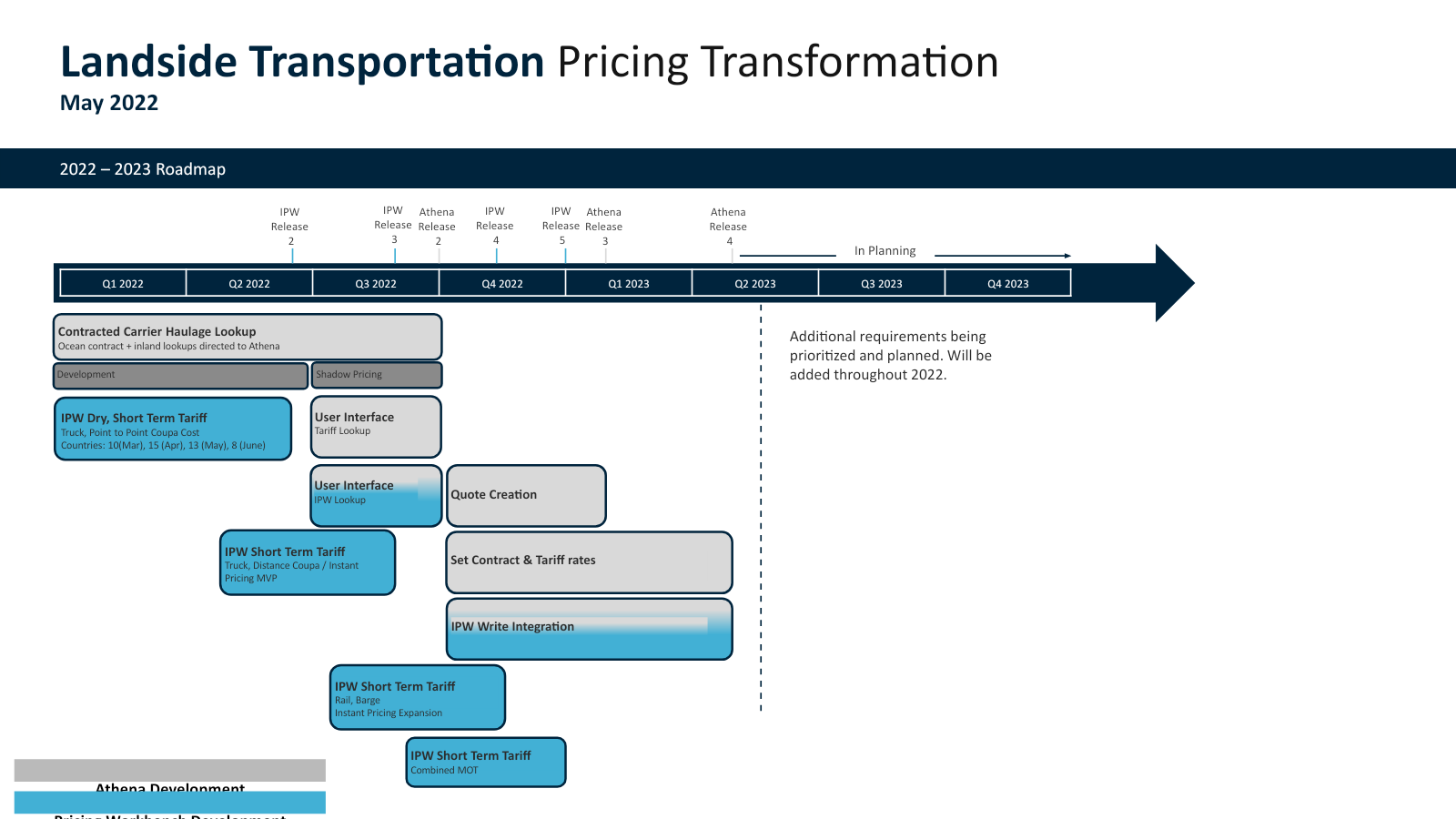
The 2022–2023 roadmap linked workbench development with the wider pricing platform. The intended capabilities included configurable pricing attributes, market and tariff rates, contracted rates, cost transparency and traceability.
More advanced possibilities, including quote optimisation, negotiation assistance and autonomous pricing, were explicitly potential features subject to prioritisation. The case does not present them as released functionality.
Make complex rules usable.
Make change manageable.
This case brings together pricing logic, cross-team responsibilities and staged adoption. The design opportunity is to give people enough visibility and control to make confident decisions, while reducing the effort of carrying those decisions between systems.
The supplied introduction establishes the programme vision, calculation model and proposed process changes. It does not document user research, usability results, launch performance or an individual allocation of responsibilities. Those distinctions keep the portfolio story grounded in the available evidence.