
Explain recommendations and allow a choice.
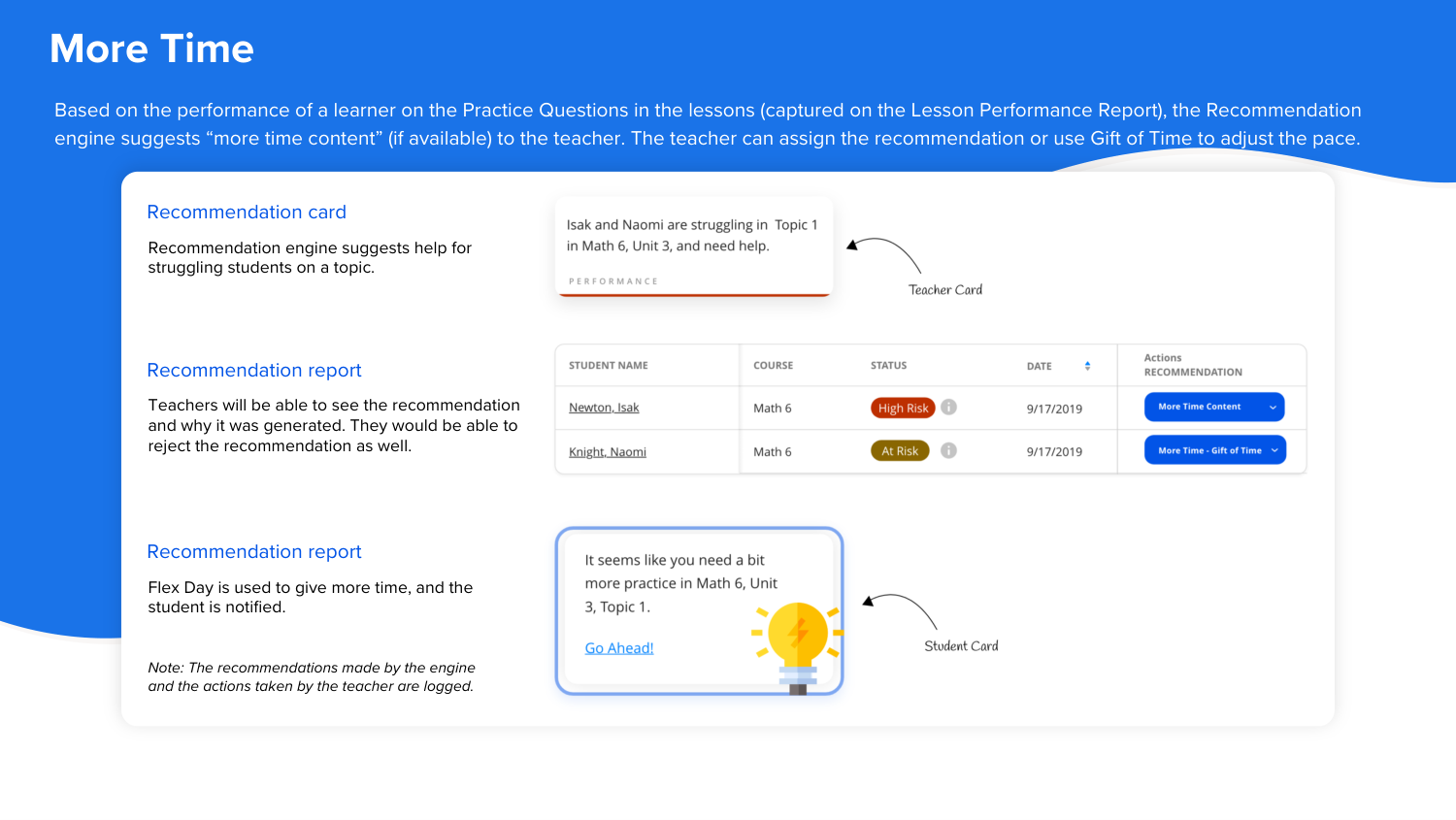
The “More Time” concept shows teachers why support is recommended and lets them accept or reject it. The design also specifies logging the recommendation and the teacher’s action.
Connecting learner needs, teacher judgement and digital learning tools for Commonwealth Charter Academy (CCA), a virtual school in Pennsylvania, USA.

The stated ambition for myedio was a personalised learning experience that engages the family and helps learners succeed in school and in life. The materials include student and teacher personas, alongside concepts for dashboards, live classes and tools for content creation.
The adaptive-learning design had to account for learners who need prerequisite support, more practice or a greater challenge. Teachers needed ways to understand those needs and respond, while content authors needed to prepare the available pathways.
The central design tension was how to personalise support without making the experience harder to understand or taking control away from the teacher.
The roadmap connected the long-term ambition to a staged approach. The foundational phase focused on teachers and students, rule-based recommendations, a learning-object repository and analytics. Later phases proposed broader audiences and more advanced AI recommendations.
Design sprints, mock-up demonstrations and focus groups appeared along that roadmap. This made the sequence of learning and validation visible alongside the planned feature development.
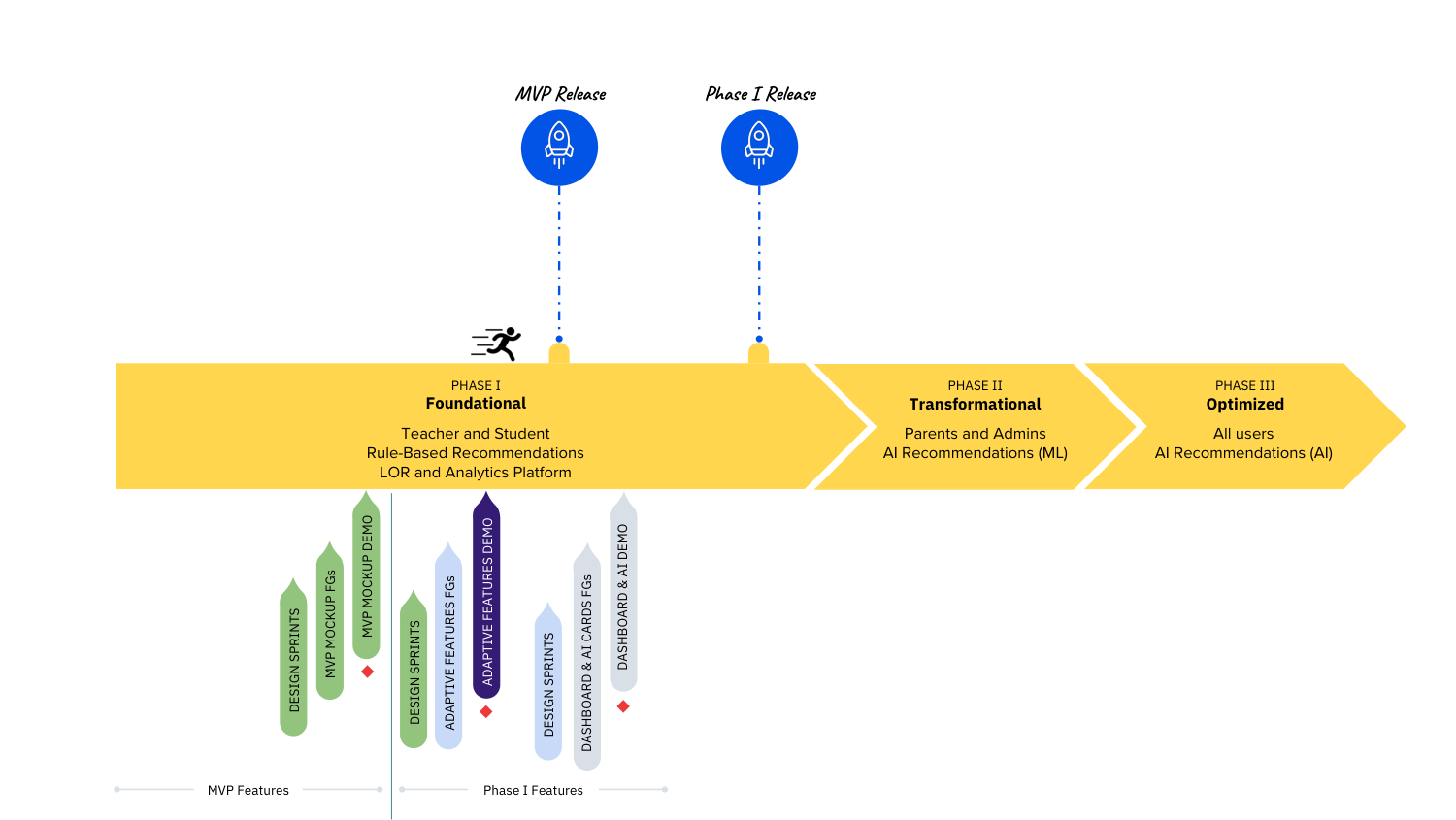
The opportunity was to connect the experience promise to a credible sequence of decisions, validation activities and delivery priorities.
The “More Time” concept shows teachers why support is recommended and lets them accept or reject it. The design also specifies logging the recommendation and the teacher’s action.
Flex Days create space in the course plan for prerequisite content, extra practice or a change of pace. Personalisation therefore extends into the course structure.
Retake and remediation concepts focus on knowledge gaps. Learners can request another attempt, while teachers can pair it with targeted support.
The myedio principles call for assistance, simplicity, respect for values and improved efficiency. These support a design direction in which AI helps people act while preserving their agency.
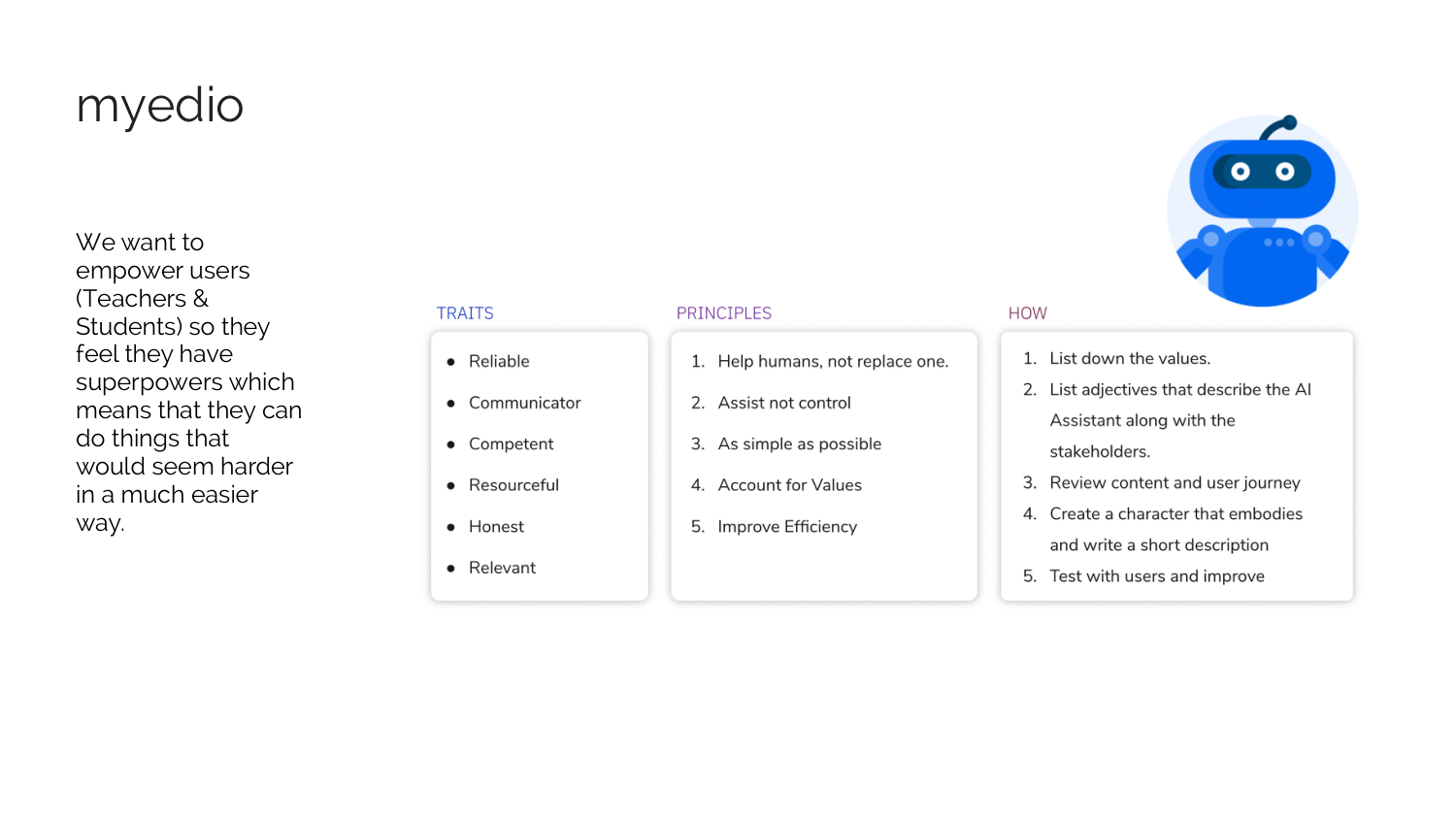 myedio, p. 4. Human-centred principles for the proposed assistant.
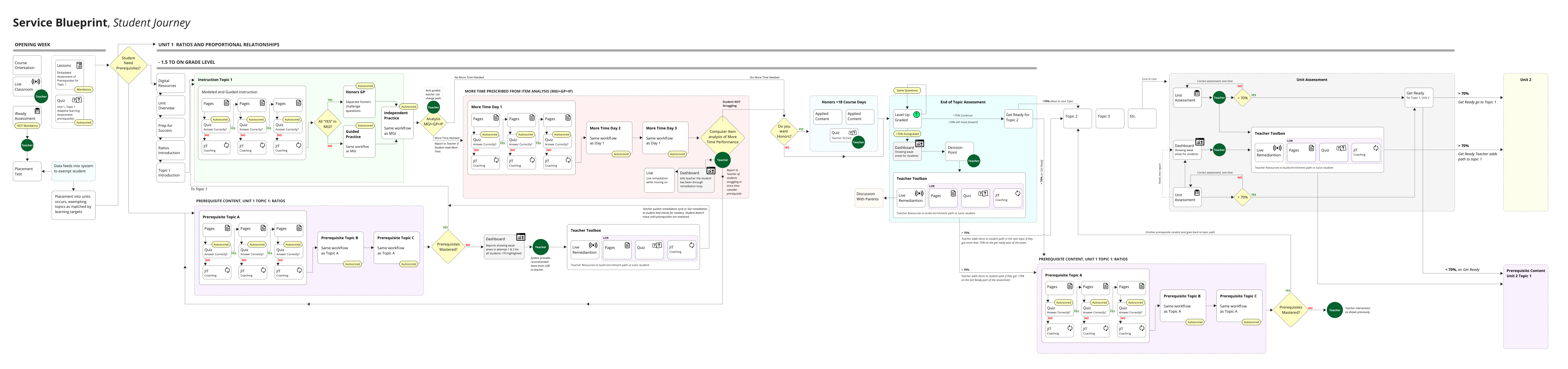
The student service blueprint maps the journey from orientation and prerequisite assessment through instruction, practice, support, honors and unit assessment. It brings automated scoring, teacher analysis and learning pathways into one view.
The PAL Cards workshop materials complement this with problem framing, idea generation, voting and prototype planning. The synthesis groups questions under navigation, grouping, placement and analytics.
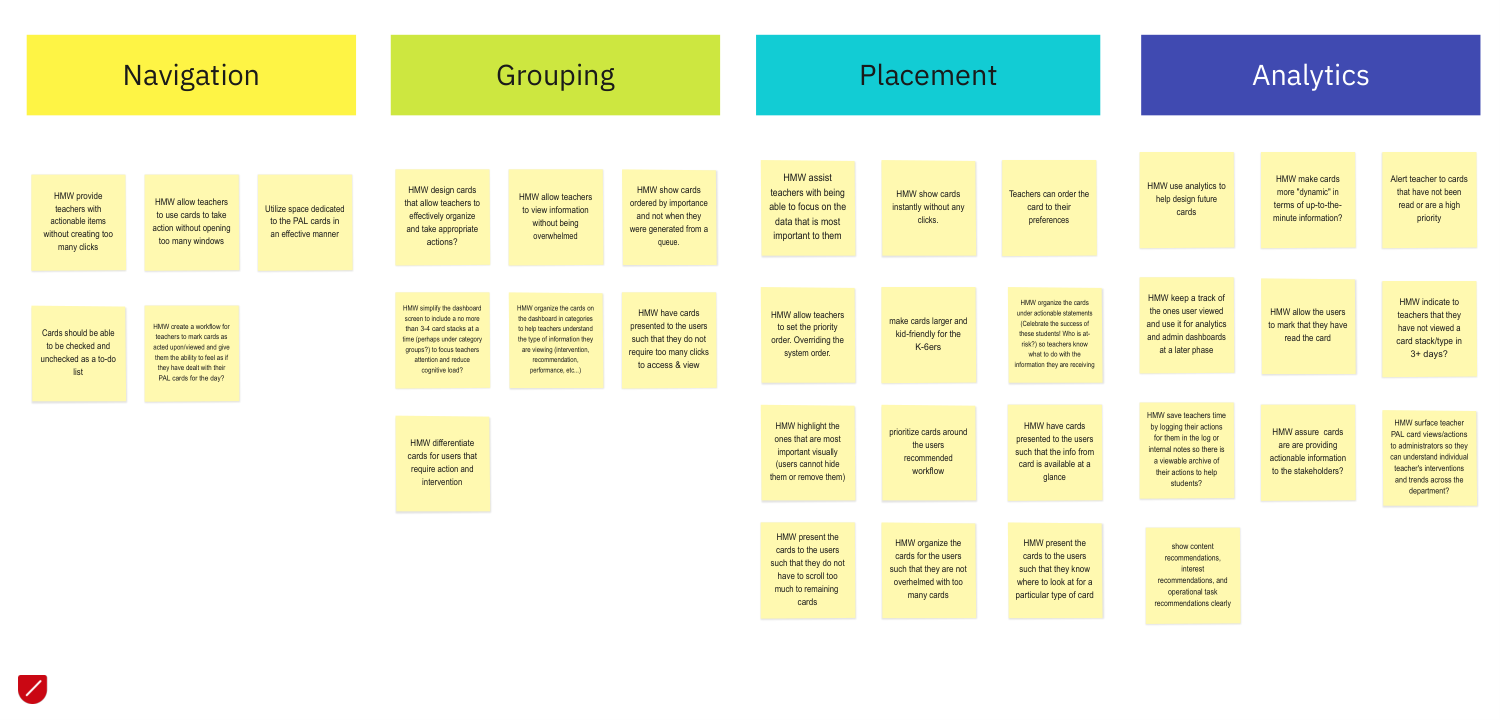 Workshop — PAL Cards, p. 26. A working synthesis, rather than evidence that every proposed activity or test was completed.
The blueprint and workshop synthesis make dependencies and choices available for discussion across design, teaching, content and technology.
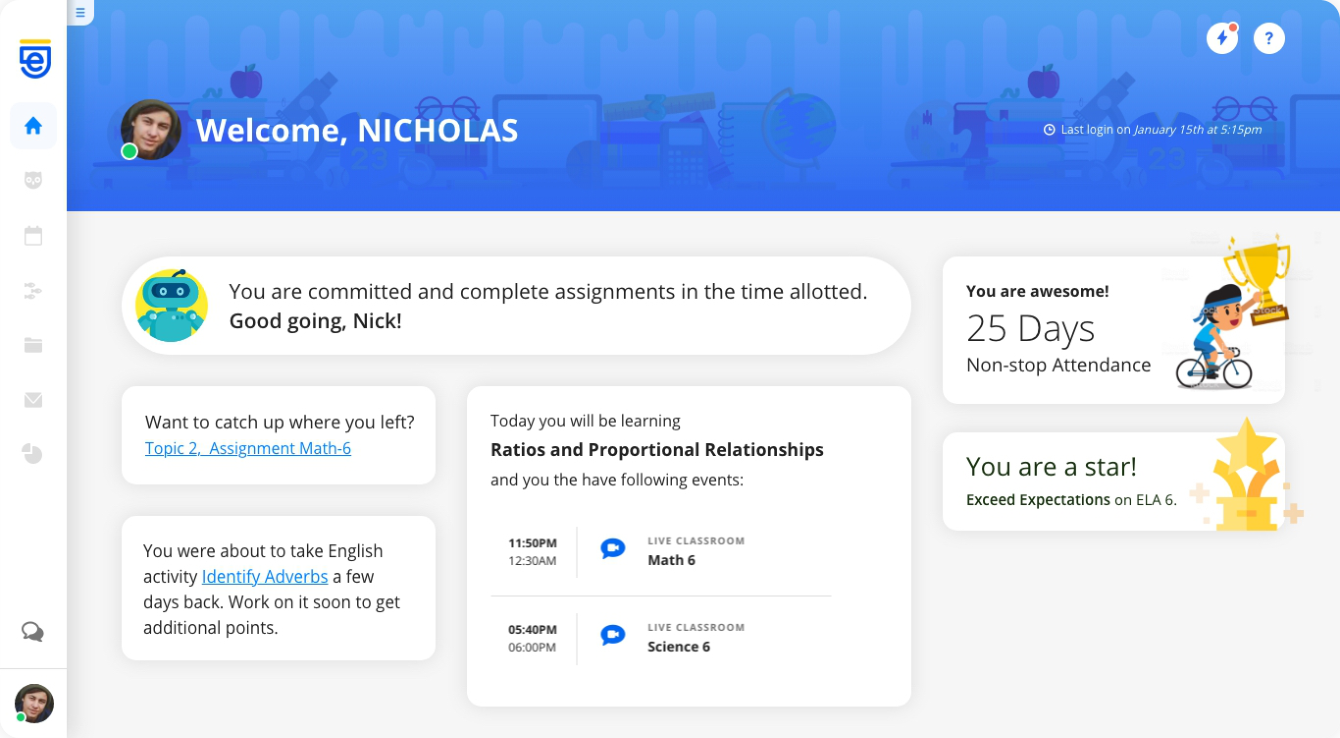
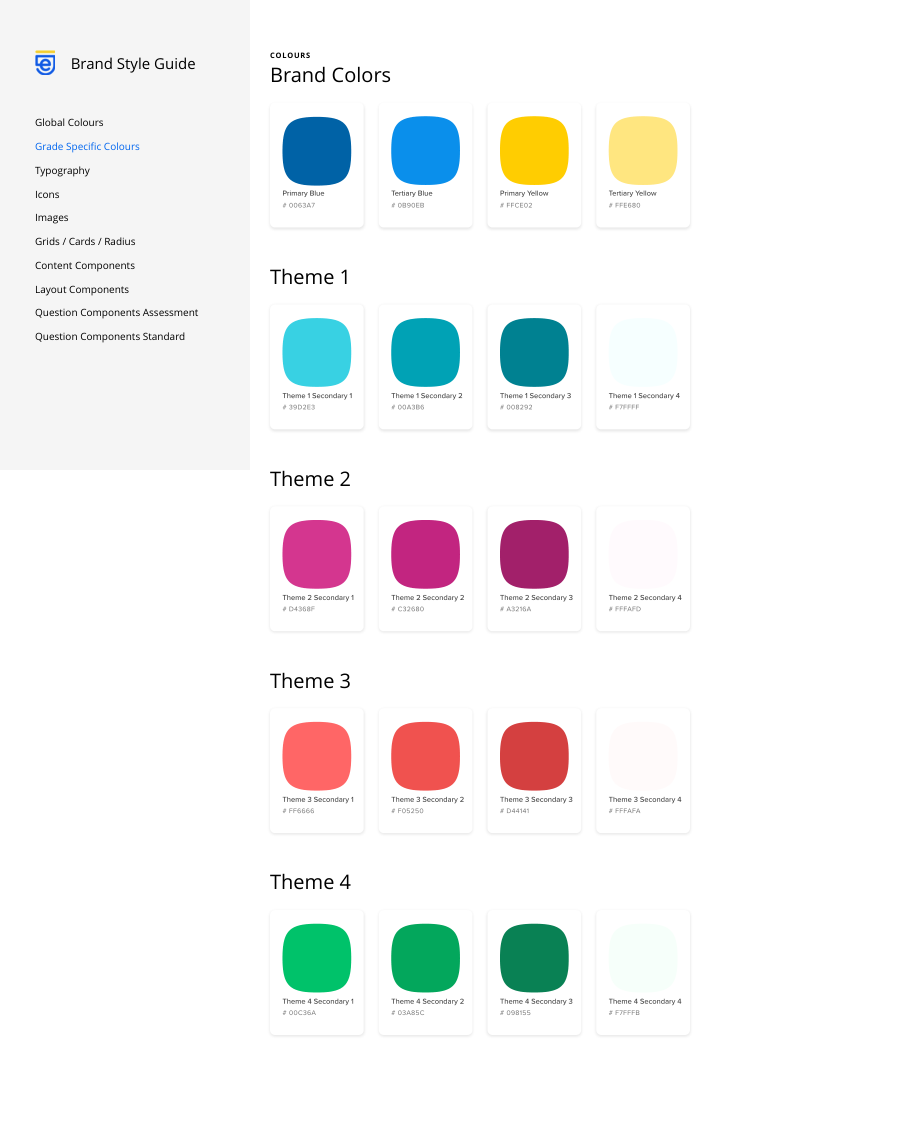
The brand guide documents global and status colours, grade-specific themes, typography, icons and reusable content and assessment components. It provides a common language across varied learning experiences.
Branding DS, pp. 1–10. Theme colours shown here from p. 2.
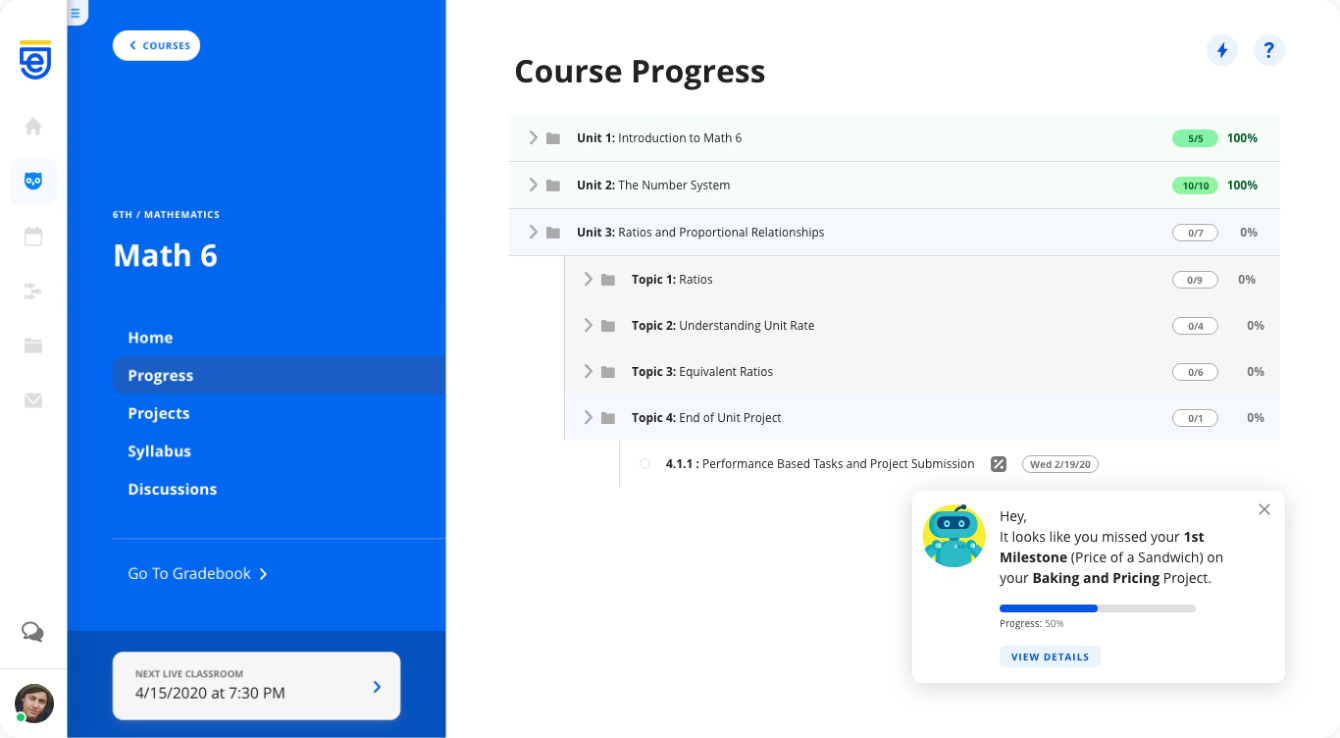
The wider work includes course progress, authoring tools and EdioLive video conferencing. The EdioLive document shows interface iterations and concepts for breakout rooms and private chat. These are connected teaching touchpoints within the supplied case-study bundle.

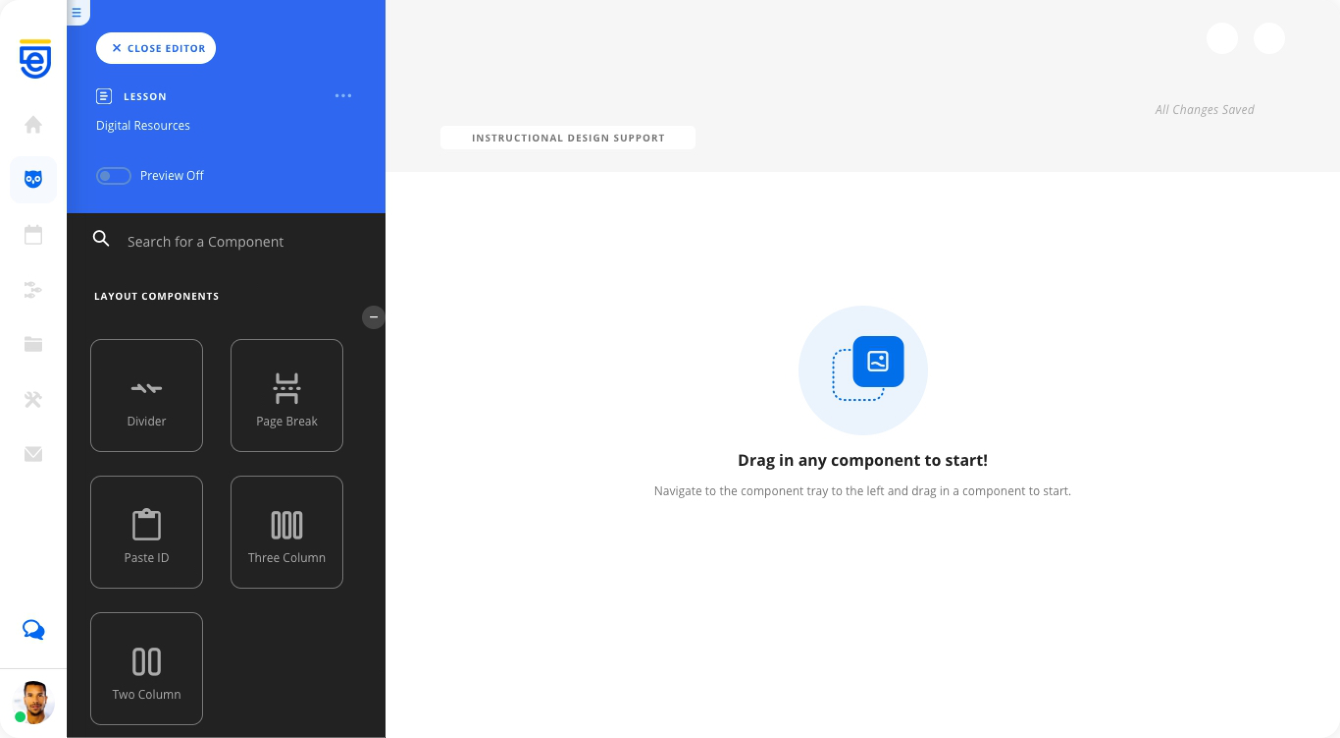
The documented focus-group feedback supported learner-requested retakes and creative use of Flex Days. It also exposed important requirements: teachers wanted to apply support to groups, understand the cumulative workload across courses and avoid empty days for students who did not need additional practice.
The implication for the design is that a useful recommendation needs context. Supporting one topic cannot be considered in isolation from the learner’s wider schedule or the teacher’s workload.
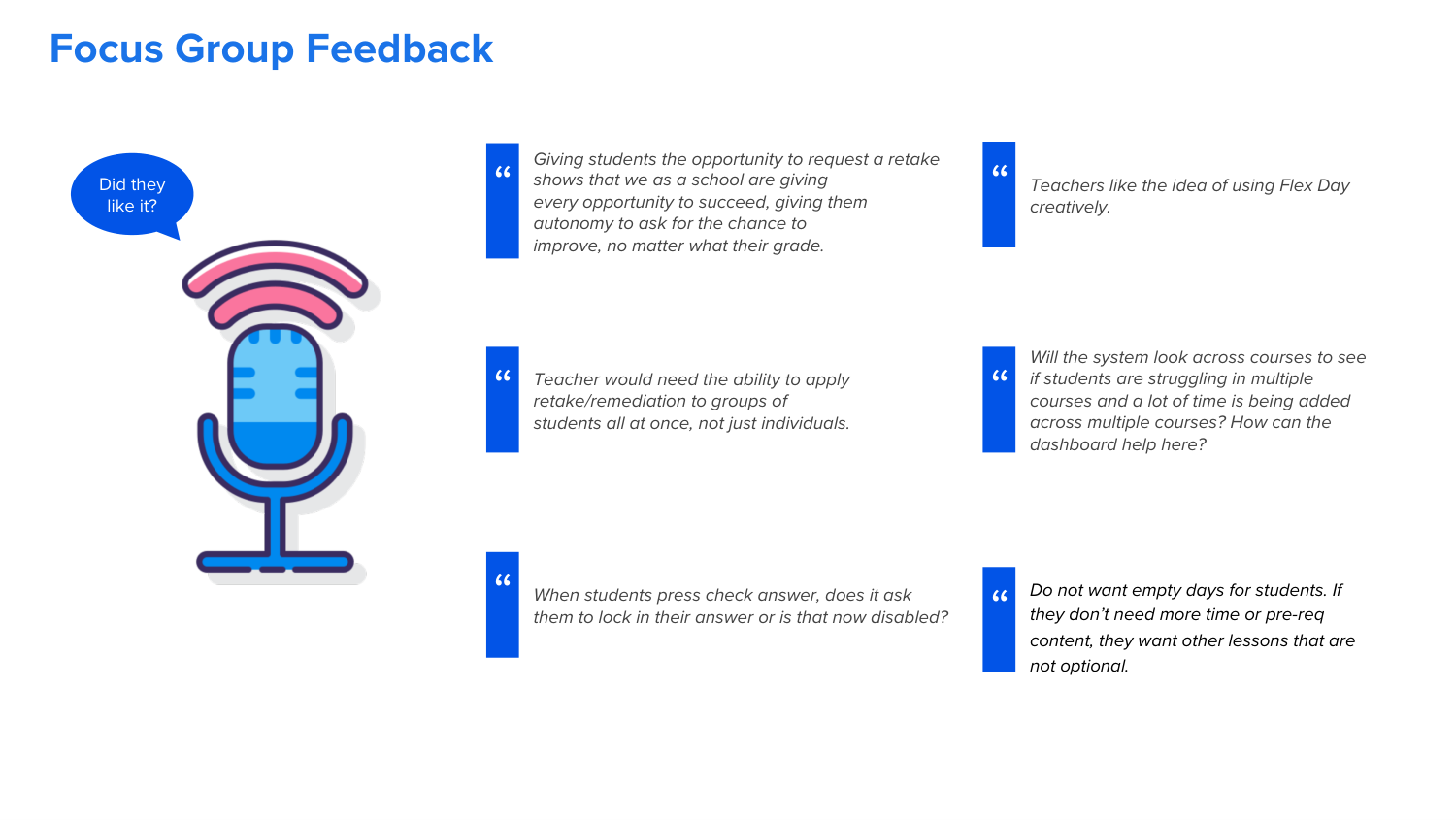 Adaptive Learning, p. 49. Qualitative feedback; participant count and research protocol are not provided in this extract.
The supplied materials document an experience vision, personas and AI principles, a phased roadmap, workshop synthesis, a student service blueprint, interface concepts and a shared design system.
They also record qualitative feedback that can inform the next design decisions. They do not establish post-launch learning gains, adoption, time savings or commercial growth. Those outcomes will be added when verified, alongside my specific role and the contributions of the team.
Personalisation requires coordination across the service: the support a learner receives, the decisions a teacher makes and the content the organisation can provide.

